The Ninja Nutri-Plus Personal Blender: A Practical Guide to Personal Blending

Introduction
Personal blenders have become increasingly popular in kitchens across the country, and for good reason. They offer a practical solution for individuals looking to prepare quick, nutritious meals without the complexity or cleanup that comes with full-sized appliances. The Ninja Nutri-Plus Personal Blender (model BN301) represents one option in the personal blender category that’s worth understanding if you’re considering investing in this type of kitchen equipment.
This model brings together a particular set of features—primarily its 900-peak-watt motor and multiple serving cup configuration—that appeal to people with different blending needs. Whether you’re interested in morning smoothies, plant-based sauces, nut butters, or frozen beverages, understanding how a personal blender works and what this specific model offers can help you make an informed decision about whether it fits your kitchen routine.
This guide walks through the Ninja Nutri-Plus’s key features, practical applications, considerations for different users, and answers to common questions people have when evaluating personal blenders.
Understanding the Core Technology
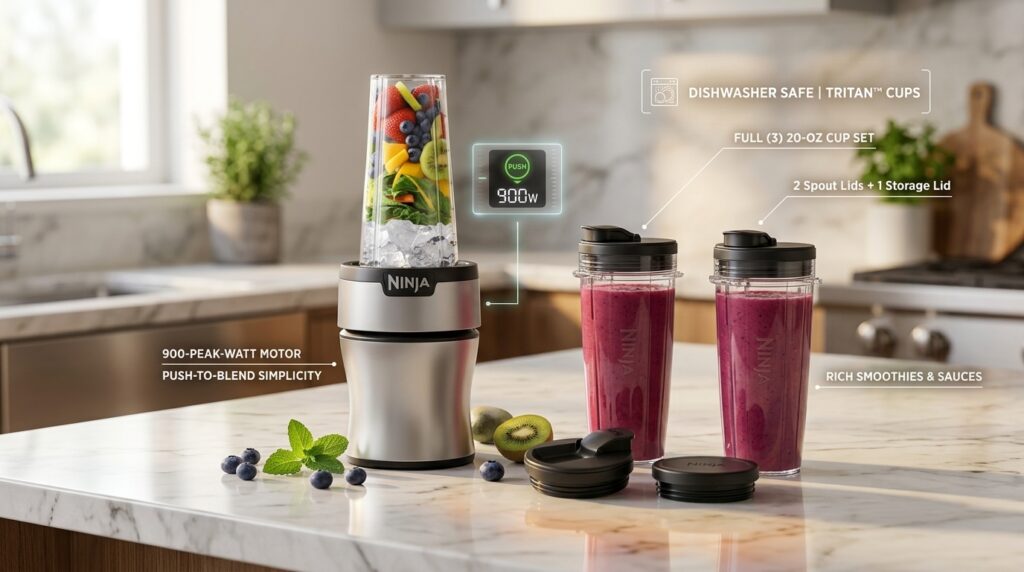
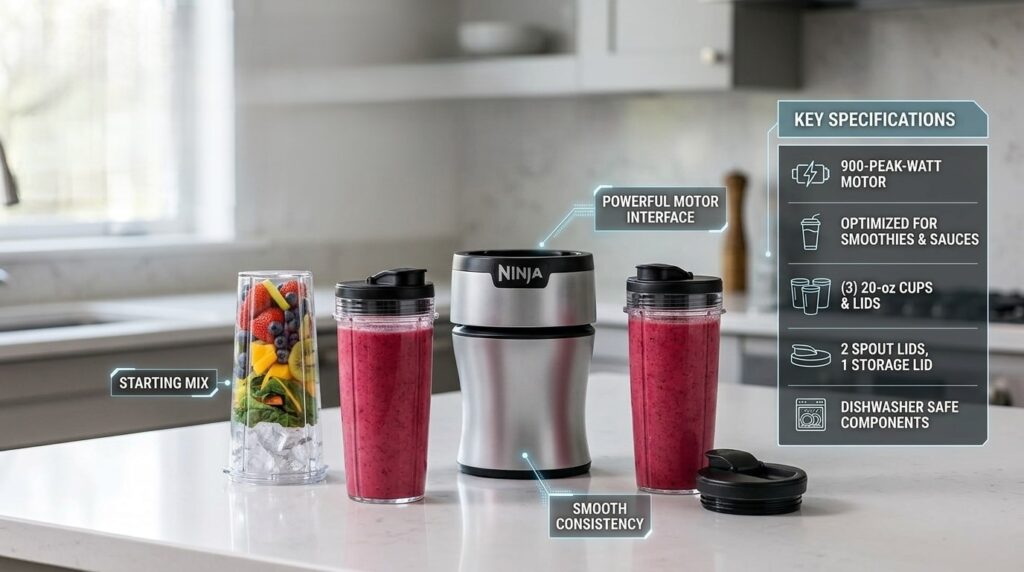
At the heart of any blender sits its motor, and the specifications matter more than many people realize. The Ninja Nutri-Plus features a 900-peak-watt push-to-blend motor. Peak wattage refers to the maximum power output the motor can generate, typically during the initial startup phase. Understanding this distinction helps set realistic expectations about what the blender can handle.
The push-to-blend mechanism differs from traditional blenders that rely on a button activation system. Instead, you maintain pressure on the cup to keep the motor running, which gives users continuous control over blending time and intensity. This design choice has practical implications for how you’ll operate the machine and how long individual blending sessions might take compared to models with preset programs.
Motor power directly influences how the machine handles different ingredients. Tougher items like frozen fruit, ice, nuts, and dense vegetables require more energy to process. A 900-peak-watt motor sits in the middle range of personal blender options—powerful enough for most everyday applications but worth considering against your specific needs.
The Multi-Cup Configuration System
The three 20-ounce cups included with this model represent one of the key differentiators for this blender. The standard capacity of 20 ounces translates to roughly two and a half cups of liquid, which works well for individual smoothies or single-serving sauces.
Having multiple cups included changes how you might use this blender in practical terms. Rather than washing a cup between blends, you could prepare several servings at once—useful if you’re making breakfast smoothies for multiple people or if you like to batch-prepare items like sauces or nut butters. The cups themselves serve double duty as both blending vessels and drinking containers, reducing the number of dishes involved in your blending routine.
The inclusion of two spout lids and a storage lid adds versatility. Spout lids enable pouring directly into glasses or containers, while the storage lid allows you to refrigerate prepared blends right in the cup. This design minimizes transfer between dishes and makes the cups suitable for on-the-go consumption if needed.
Material composition matters for durability and long-term use. While the specific material isn’t always emphasized in product descriptions, the cups need to withstand both the mechanical stress of blending and regular dishwasher cycles.
Key Features and Their Practical Applications
Push-to-Blend Activation
The push-to-blend mechanism requires active engagement during the entire blending cycle. This differs fundamentally from preset programs or timed functions found on some other models. You press the cup against the motor base, and the motor runs continuously as long as you maintain that pressure. This approach offers granular control—you can stop instantly if needed—but it also means you’re actively involved in every blending session rather than setting a timer and stepping away.
For controlled blending of delicate ingredients, this can be an advantage. You can stop the moment your mixture reaches the desired consistency rather than worrying about over-processing. However, it does require your attention and physical presence, which might feel limiting if you’re accustomed to hands-off appliances.
Dishwasher Safe Components
The dishwasher-safe designation applies to the removable parts—specifically the cups and lids. This matters more than it might initially seem, particularly if you plan to use the blender multiple times daily or if hand-washing convenience is important to you. Dishwasher compatibility speeds up cleaning and simplifies maintenance.
The motorized base itself shouldn’t go in the dishwasher, as is standard for all electric blenders. You’ll want to rinse the motor connection point and dry it thoroughly to prevent electrical issues.
Compact Footprint
Personal blenders inherently occupy less counter or storage space compared to full-sized models. The Ninja Nutri-Plus maintains this advantage, making it suitable for apartments, small kitchens, or spaces where counter real estate is limited. When not in use, the blender stores compactly, and the multiple cups can be stacked or stored separately.
Practical Uses and Blending Applications
The blender’s capabilities extend across several common kitchen tasks, though the scope differs depending on how you approach each application.
Smoothie Preparation
This remains the primary use case for personal blenders. Combining frozen fruit, yogurt, milk or milk alternatives, and other ingredients into a drinkable consistency is something the Ninja Nutri-Plus is designed to handle. The 20-ounce cup size works well for individual smoothies or smoothies sized for two people sharing. If you regularly make smoothies for a family of four or more, you’d need to blend multiple batches.
The push-to-blend system allows you to blend until reaching your preferred texture. Some people prefer chunky smoothies with visible fruit pieces, while others want complete homogeneity. You control the endpoint rather than waiting for a preset cycle to complete.
Nut Butters and Pastes
Transforming whole nuts into creamy butter is achievable with a capable motor, though it’s more demanding than smoothie preparation. The process involves extended blending time to break down nut structure and release natural oils. The 900-peak-watt motor can handle this task, but expect longer processing times compared to high-powered blenders. Consistency matters—stopping and scraping down the sides periodically helps distribute the blending force evenly.
Sauces and Dips
From hummus to salsa to pesto, blending ingredients into sauce-like consistency is well within the blender’s intended purpose. The smaller cup size works fine for making personal portions or smaller batches. If you’re preparing sauce for a large gathering, you’d need multiple cups or alternative equipment.
Frozen Beverages
Crushing ice and frozen fruit for blended drinks works with the Ninja Nutri-Plus, though harder ice might require more blending time than softer frozen fruit. Starting with partially melted ice or pre-crushed ice can make the process easier and faster.
Soups and Warm Preparations
Some personal blenders can handle warm liquids, though this requires caution to prevent pressure buildup and burns. The high-speed friction of blending can generate heat, potentially warming cool ingredients. However, blending already-hot soup requires careful handling—never fill the cup to the top when blending hot liquids, as they can splash or steam forcefully. For this application, you’d generally blend hot soup in smaller batches with care.
Who This Blender Might Suit
Individual Health-Conscious Consumers
People focused on nutrition who consume smoothies several times weekly or daily find personal blenders particularly useful. The single-serving size matches their consumption habits without unnecessary bulk.
Busy Professionals and Students
The quick preparation and minimal cleanup align well with hectic schedules. Creating a nutritious breakfast smoothie in minutes compares favorably to more elaborate cooking methods.
People with Limited Kitchen Space
Apartment dwellers and those in small homes benefit from compact appliances. This blender occupies a small footprint compared to full-sized alternatives.
Households with Varying Dietary Preferences
When family members have different nutritional needs or preferences, individual cups allow customization without preparing large batches. One person’s green smoothie, another’s fruit blend—each prepared separately.
Those Seeking Simplicity
People who prefer straightforward appliances without complex controls or multiple settings often appreciate personal blenders. The push-to-blend mechanism eliminates menu navigation or programming.
Important Considerations Before Purchasing
Motor Endurance for Extended Use
The 900-peak-watt motor performs well for typical personal blending needs, but continuous heavy use differs from intermittent blending. If you’re running the blender continuously for several minutes at a time, multiple times daily, monitor whether the motor shows signs of strain. Personal blender motors are engineered for moderate use cycles rather than professional kitchen demands.
Volume Limitations
The 20-ounce cups mean you’re limited to individual portions. If you regularly prepare large batches—whether for meal prep, large families, or entertaining—you’ll need to run multiple cycles. This isn’t a limitation for single individuals or small households, but it matters if scaling is important to your use case.
Texture Control
With push-to-blend activation, you maintain control over blending time but also shoulder responsibility for achieving desired consistency. There’s no preset program to rely on if you’re unsure how long to blend. Learning the appropriate timing for different ingredients takes experience.
Noise Levels
All high-powered blenders generate significant noise during operation. Personal blenders are typically louder than standard kitchen appliances, so early morning or late evening use might disturb household members or neighbors if you’re in close quarters.
Power Cord Management
The motorized base requires a power outlet, so you’re limited by cord length. Consider your kitchen layout and whether you have convenient outlet access near your preferred blending location.
Long-Term Durability
Personal blenders generally have shorter lifespans than full-sized models, partly because they operate with higher intensity on smaller motors. Understanding that this represents a mid-range investment rather than a permanent fixture helps set appropriate expectations.
Comparison with Other Blender Categories
Versus Full-Sized Blenders
Full-sized blenders typically feature larger pitchers (40-60 ounces), more powerful motors, and additional functions like heating or multiple speed settings. They handle batch preparation better and generally offer more durability. However, they demand more counter space and cleaning effort. Personal blenders sacrifice capacity for convenience and footprint. The choice depends on whether convenience or capacity matters more to your situation.
Versus Immersion Blenders
Hand-held immersion blenders offer maximum simplicity and storage efficiency but require active handling and are limited to softer ingredients. They work well for soups and sauces prepared directly in pots or bowls but struggle with frozen fruit or nuts. The Ninja Nutri-Plus offers more power and versatility in exchange for dedicated storage space.
Versus Other Personal Blender Models
Various manufacturers produce personal blenders with different motor specifications and features. Some emphasize preset programs or heating functions, while others focus on simplicity. The Ninja Nutri-Plus prioritizes straightforward operation and multiple cups. Comparing specific models requires looking at individual specifications, motor power, cup capacity, and warranty offerings.
Maintenance and Care
Keeping a personal blender in good working order involves basic regular maintenance. After each use, rinsing the cups and lids immediately prevents dried residue from hardening. The dishwasher-safe cups simplify this step significantly. The motor base needs a quick wipe of the connection point to keep it dry and functional.
Avoiding prolonged dry runs—running the motor without liquid or ingredients—helps protect the motor from unnecessary strain. Similarly, not overfilling the cups ensures the motor can operate without struggling.
The seals on the lids should remain functional to prevent leaks. Replacing lids if they crack or no longer seal properly prevents messy situations when transporting filled cups.
Frequently Asked Questions
How long does the blending process typically take?
Time varies significantly based on ingredients. A simple smoothie with soft ingredients might blend in 30-45 seconds, while nut butter or tougher vegetable combinations could require several minutes. The push-to-blend mechanism means you’re in control rather than following preset timing.
Can this blender handle ice?
Yes, the 900-peak-watt motor can handle ice, though softer alternatives like frozen fruit blend faster. Hard ice may require extended blending time or pre-crushing. Consistency is improved by mixing ice with liquid ingredients rather than blending ice alone.
Are the cups and lids truly dishwasher safe?
The manufacturer indicates the cups and lids are dishwasher safe, though checking your specific dishwasher’s recommendations prevents issues. Some people prefer hand-washing to extend the life of plastic components, though this is a personal choice.
How many cups come with this model?
Three 20-ounce cups come included, along with two spout lids and one storage lid. This configuration allows preparing multiple servings before washing or having backup cups available.
Does the motor get hot during use?
Blender motors generate heat during operation. The motor base might become warm to the touch after extended blending, which is normal. However, this shouldn’t prevent normal use.
Can you make hot soup with this blender?
Technically possible, but requires care. Never blend hot soup to the brim—fill only partially to prevent splashing or steam burns. Blending friction can warm cool ingredients, and in some cases warm them further. Always exercise caution with hot liquids in any blender.
What’s the warranty coverage?
Warranty details should be verified with the manufacturer or retailer, as coverage can vary by purchase location and region. Standard limited warranties typically cover mechanical defects but not normal wear or misuse.
Does it work with plant-based milk alternatives?
Yes, the blender handles non-dairy milks identical to dairy alternatives. Any liquid base works the same way from the motor’s perspective.
How powerful is this compared to commercial blenders?
Personal blenders, including this model, operate at much lower power levels than commercial or professional-grade machines. Commercial equipment often features 2000+ watt motors and handles continuous operation differently. For home use, the 900-peak-watt specification is adequate for personal needs.
Can you make nut milk from this blender?
Making nut milk involves blending soaked nuts with water to create a liquid base, then straining through fine mesh. The Ninja Nutri-Plus can handle the blending portion, though the 20-ounce capacity means working in smaller batches. The straining step requires separate equipment.
Conclusion
The Ninja Nutri-Plus Personal Blender represents a practical choice for individuals seeking convenient, space-efficient blending. The 900-peak-watt push-to-blend motor provides sufficient power for typical personal blending applications, while the three included 20-ounce cups with multiple lids create flexibility for different usage patterns.
This model works well for people who prioritize convenience and simplicity over complex features or large-batch capacity. Whether you’re making daily smoothies, preparing sauces, or experimenting with frozen beverages, the equipment provides the functionality needed for these tasks.
Like any kitchen appliance, it comes with tradeoffs. The push-to-blend mechanism requires active involvement, the cup size limits single-batch volume, and the motor operates within personal blender parameters rather than professional standards. Understanding these characteristics helps determine whether this particular model aligns with your actual blending habits and kitchen needs.
The durability and longevity of this blender depend significantly on realistic usage patterns and appropriate maintenance. Using it within its intended scope—multiple short blending sessions daily rather than continuous professional operation—supports reliable long-term performance.