The Keurig K-Duo: A Comprehensive Guide to Dual-Brewing Coffee Making

Introduction
The landscape of home coffee brewing has evolved dramatically over the past decade. What was once a simple choice between a traditional drip machine or a French press has expanded into a diverse ecosystem of brewing methods, each with its own advocates and practical advantages. Among the various options available today, machines that combine flexibility with convenience have gained particular attention from households with diverse coffee preferences.
The Keurig K-Duo represents an interesting approach to this challenge: bridging the gap between single-serve brewing and traditional carafe-style coffee making. With its second-generation design, this machine attempts to address a common household scenario—when people have different coffee preferences, schedules, or consumption patterns under one roof.
Understanding whether a particular coffee maker aligns with your lifestyle requires looking beyond marketing language and diving into what the machine actually does, how it works, and what situations might make it particularly useful or potentially less suitable for your needs.
Key Features and How They Work
The Dual-Brewing Capability
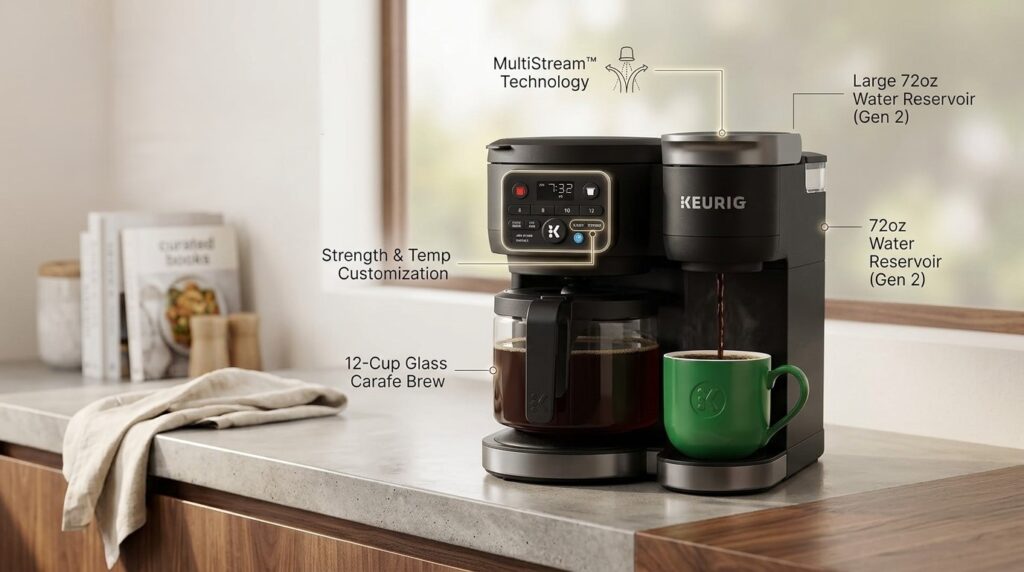
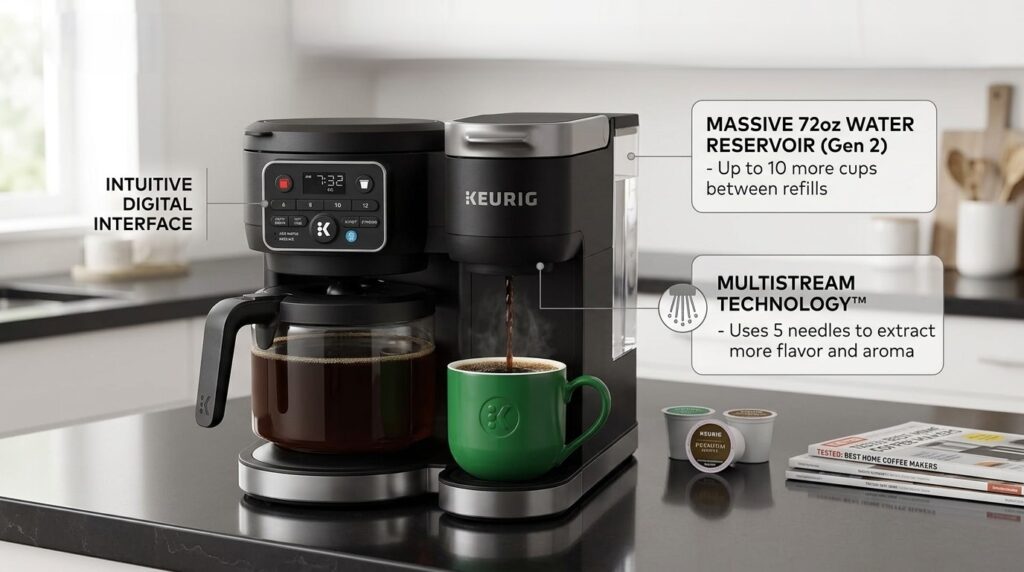
The defining characteristic of the K-Duo is its ability to brew in two distinct ways. On one side, it functions as a single-serve brewing system, similar to the compact Keurig machines many people are familiar with. On the other side, it includes a traditional carafe brewing station. This design choice reflects a practical reality: not everyone in a household wants the same amount of coffee, in the same format, at the same time.
The single-serve side accepts K-Cup pods—those small, sealed capsules containing pre-portioned ground coffee. This approach offers consistency and convenience, particularly for people who want a quick cup without waiting or measuring. The carafe side, meanwhile, operates more like conventional automatic coffee makers, using ground coffee and a filter to brew larger quantities.
Having both options in one footprint means users don’t need to choose between different machines or sacrifice one brewing method to accommodate another. For some households, this addresses a genuine pain point in morning routines where family members have conflicting timing or preferences.
MultiStream Technology
The second-generation model incorporates what the manufacturer calls MultiStream Technology. This refers to the water distribution system during brewing. Rather than pouring water through a single stream, this system uses multiple streams to distribute hot water across the coffee grounds more evenly.
The practical implication is more uniform saturation of the grounds during the brewing process. When water contacts coffee grounds unevenly, some portions become over-extracted while others remain under-extracted, potentially resulting in an unbalanced cup. More consistent water distribution aims to minimize this variance, though the practical difference this makes depends on various factors including grind size, coffee type, and water temperature.
The 72-Ounce Reservoir
A 72-ounce water reservoir sits at the foundation of the machine’s functionality. This capacity represents roughly the amount needed for a full carafe plus several single-serve cups without refilling. For perspective, this is considerably larger than many single-serve-only machines, which might have 40-50 ounce reservoirs.
The practical benefit is reduced frequency of refilling water, particularly valuable during busy mornings when multiple people might brew at different times. However, it’s worth noting that a larger reservoir also means the machine itself takes up more counter space—a consideration for those working with limited kitchen real estate.
Additional Functional Elements
The machine includes adjustable brewing settings, allowing users to select brew strength on both the single-serve and carafe sides. Programmable features enable scheduling, meaning the machine can begin brewing automatically at a set time. This addresses a common appeal of automatic coffee makers: having freshly brewed coffee ready upon waking.
The design includes a hot water dispenser function, which some users appreciate for brewing tea, instant oatmeal, or other applications requiring hot water. This adds a layer of functionality beyond just coffee brewing.
Temperature control is another consideration. The machine heats water to specific temperatures during the brewing cycle. Understanding these operational temperatures can matter for certain coffee types and personal preferences, though the manufacturer handles these specifics rather than requiring manual adjustment from users.
How It Can Be Used in Different Scenarios
The Multi-Person Household with Varied Preferences
Consider a household where one person prefers a quick, small cup of coffee before heading to the gym, another wants a full carafe for sipping at leisure during breakfast, and a third person doesn’t drink coffee but needs hot water for tea. Traditional single-serve machines struggle with the carafe requirement. Conventional drip machines don’t efficiently make single cups. The K-Duo’s dual approach handles all three situations without compromise.
Morning timing differences also create practical challenges in shared households. If one person wakes at 5:30 AM and another at 7:00 AM, a machine that can brew small quantities quickly on demand, then later brew a full pot, reduces the situation where coffee sits in a carafe cooling or someone has to interrupt sleep to start the machine for others.
Work-From-Home Professionals
Someone working from home might use the machine differently than a household with external schedules. A work-from-home coffee drinker often has flexibility in timing but might want multiple cups throughout the day. Using the single-serve side for a quick morning cup, then brewing a full carafe mid-morning that can be consumed over several hours, combines the convenience of variety with efficiency.
The programmable feature becomes particularly relevant here—the ability to have coffee ready when commencing work, or at the mid-morning slump, requires minimal conscious effort or attention.
Entertaining and Hosting
Occasions when hosting guests involve coffee logistics that these machines can address. A carafe-brewing function means serving multiple people without running constant single-serve cycles. Meanwhile, if a guest prefers something different than what’s being served to others, the single-serve option accommodates that without waste.
Transitional Situations
People often change their coffee habits at different life stages. New parents, for instance, might suddenly need quick, small cups they can consume in stolen minutes. Yet they might have overnight guests accustomed to traditional pots of coffee. A machine spanning both approaches accommodates these transitions without requiring equipment changes.
Who Might Find This Machine Suitable
Households with Diverse Coffee Habits
The most obvious candidate is any household where people want different amounts of coffee. This includes multi-generational homes, partnerships with different preferences, or families where teenagers are developing their own coffee habits separate from parents.
People with Space Constraints But Multiple Needs
Individuals in apartments or kitchens with limited counter space face a constant negotiation between different appliances. A dual-function machine consolidates needs that might otherwise require two separate devices. For someone who wants single-serve capability but also needs to brew for guests, this represents a reasonable spatial compromise.
Those Seeking Reliability and Mainstream Support
Keurig machines have substantial market presence, meaning parts, accessories, and pods are widely available. Unlike more niche brands, finding replacement water filters or K-Cup selection in standard retail environments is straightforward. This accessibility matters practically for long-term ownership and maintenance.
Coffee Enthusiasts Exploring Multiple Methods
Interestingly, some coffee enthusiasts appreciate having multiple brewing methods available for experimentation. The single-serve side offers something different from the carafe side, allowing someone to explore how brewing method affects flavor in their own kitchen using coffee they select.
Important Considerations Before Choosing This Type of Machine
Water Quality and Mineral Buildup
Any machine that heats water repeatedly can experience mineral accumulation over time—a process called scale buildup. This occurs more quickly in areas with hard water. While the machine includes filter capability, maintenance becomes necessary to prevent performance degradation.
The manufacturer provides descaling instructions, which involve running a specific cleaning cycle using appropriate solutions. This isn’t difficult, but it requires regular attention—typically quarterly, though intervals vary based on water hardness in your area. Neglecting this maintenance eventually reduces brewing efficiency and can create unpleasant flavors in your coffee.
Environmental Considerations of K-Cup Pods
Single-serve pods offer convenience but present an environmental question that deserves acknowledgment. These sealed capsules, while convenient and portion-consistent, represent a consumption pattern with waste implications. Some pods are recyclable, but this requires awareness and effort.
For environmentally-conscious users, the machine does offer a middle path: using the carafe side primarily and reserving single-serve for occasional use. Others address this through alternative pod brands specifically designed for composability or recyclability, though this requires intentional selection at purchase time.
Learning Curve and Complexity
While not complicated, these machines have more features than basic drip coffee makers. Programmable brewing, strength selection, and dual-brewing logic require initial familiarization. The trade-off for this complexity is flexibility—but some users prefer simpler machines where fewer decisions need to be made each morning.
Counter Space and Footprint
The combination of dual brewing stations and a substantial reservoir means this machine occupies more counter space than single-function devices. For kitchens where every inch counts, this is a genuine constraint rather than a minor consideration.
Long-Term Pod Costs and Availability
K-Cup pods have become more widely available over the years, but choosing this system commits you to that pod ecosystem for the single-serve function. Generic pods exist, but quality and reliability vary. Some users find the ongoing pod costs—a financial factor that persists long after purchase—significant enough to influence their brewing approach over time.
How Dual-Brewing Coffee Makers Compare to Other Approaches
Versus Single-Serve-Only Machines
Single-serve machines prioritize speed and minimal cleanup. They excel at quickly producing individual cups without waste. However, they struggle when someone needs to serve multiple people or wants to brew a larger quantity at once. They also perpetuate the pod-consumption pattern more consistently since that’s the only brewing method available.
A single-serve-only machine might be preferable for solo drinkers or people who rarely host, while dual-brewing machines address situations where scale flexibility matters.
Versus Traditional Automatic Drip Machines
Conventional coffee makers are straightforward, often significantly less expensive, and often more durable due to simpler mechanical systems. They brew larger quantities efficiently and many models maintain temperature adequately for reasonable periods. The primary limitation is lack of single-serve functionality and inability to brew small quantities efficiently.
For someone who primarily needs carafe brewing but occasionally wants a single cup, a traditional machine might remain the more practical choice. For those with regular dual needs, the convenience of having both functions integrated outweighs the additional complexity and cost.
Versus Manual Brewing Methods
Pour-over, French press, and espresso machines offer enthusiasts tremendous control over brewing variables and often produce results some coffee aficionados prefer. However, they require active participation, attention, and cleanup for each cup. They’re incompatible with busy mornings or situations requiring minimal friction.
Someone drawn to manual methods for enjoyment might still appreciate having a convenient automatic option available for days when time is limited.
Versus Espresso Machines
Espresso machines produce a fundamentally different product—concentrated shots intended for drinks like lattes and cappuccinos rather than drip-style cups. They also involve significant learning curves and skill requirements. A dual-brewing coffee maker and an espresso machine serve different purposes and audiences.
Frequently Asked Questions
How long does it take to brew coffee with this machine?
Single-serve brewing typically completes within two to three minutes from start to finish, depending on cup size selected. Carafe brewing takes longer—usually around eight to ten minutes, similar to conventional automatic coffee makers. Programming it to start brewing before you’re ready means coffee is available immediately when you need it.
Can you use regular ground coffee in the single-serve side?
No, the single-serve function is designed specifically for K-Cup pods. Regular ground coffee would create a mess and damage the machine. The carafe side, however, accepts standard ground coffee with appropriate filters.
What’s the actual capacity of the carafe?
The carafe typically holds around 48-50 ounces of brewed coffee, though some variation exists based on specific models. This capacity is clearly marked, making it straightforward to gauge how much coffee you’ll have.
Do you need to use specific K-Cup brands?
The machine works with Keurig’s proprietary K-Cup pods, but compatible third-party pods from various manufacturers are widely available. Quality varies among brands, so some experimentation might reveal preferences. Avoid counterfeit pods, which are occasionally available at unusual price points.
How often does this machine need cleaning?
Regular cleaning involves emptying used pods, wiping the brewing head, and rinsing removable components. This should happen after each use or at minimum daily if the machine is used frequently. Descaling—a more thorough cleaning process—should occur every three to six months, depending on your water hardness.
Can you brew decaffeinated and regular coffee at the same time?
Yes, since the two brewing stations are independent, one can use decaffeinated K-Cups in the single-serve side while the carafe brews regular coffee simultaneously. This is particularly useful for households with different caffeine preferences.
What if I only want to use the carafe and ignore the single-serve function?
That’s a perfectly valid approach. The carafe side functions independently as a traditional coffee maker. The single-serve capability simply provides an option; using only the carafe doesn’t negatively affect the machine.
Is the water reservoir removable?
Yes, for refilling and cleaning purposes. The removable design makes maintenance straightforward, though you’ll need to reposition it correctly to ensure proper water flow during brewing.
What if the machine brews unevenly or tastes off?
Most issues stem from mineral buildup from hard water or insufficient cleaning. Running a descaling cycle using an appropriate cleaning solution typically restores normal operation and taste. If problems persist after descaling, consulting the troubleshooting section of the manual provides additional diagnostic steps.
How long does a machine like this typically last?
With proper maintenance and regular descaling, users often report several years of reliable operation. Heavy daily use might shorten this timeframe, while moderate use can extend it. Like any appliance, individual experiences vary, and proper care during the ownership period directly impacts longevity.
Conclusion
The Keurig K-Duo with MultiStream Technology represents a pragmatic engineering solution to a real household problem: accommodating different coffee preferences and consumption patterns without requiring multiple appliances. The 72-ounce reservoir, programmable features, and dual-brewing capability combine to create flexibility that single-function machines cannot match.
Whether this machine makes sense for your situation depends on your specific circumstances. Households with genuine, regular need for both single-serve and carafe brewing will likely find the convenience substantial. Those who predominantly use one method and only occasionally need the other might find simpler, less expensive alternatives more appropriate. Solo drinkers or people with uniform preferences probably don’t need the complexity this machine provides.
Like any appliance, success with this machine involves realistic expectations about what it does and realistic commitment to basic maintenance—particularly descaling, which prevents most common issues people encounter. Understanding these realities upfront prevents disappointment later.
The coffee machine market offers diverse options because different people have different needs. This particular machine occupies a specific niche: households prioritizing flexibility and convenience over simplicity or cost. For those in that niche, it represents a thoughtful design addressing practical morning-routine challenges many face but few appliances adequately solve.