Countertop Ice Makers: A Practical Guide to Portable Ice Production

Introduction
The convenience of having ice on demand has become something many people take for granted—until they find themselves without it. Whether you’re hosting a gathering, living in an older apartment without an ice maker, or frequently traveling, the absence of readily available ice can be surprisingly frustrating. Countertop ice maker machines have emerged as a straightforward solution to this everyday challenge, and they’ve become increasingly popular among homeowners, renters, and people with mobile lifestyles.
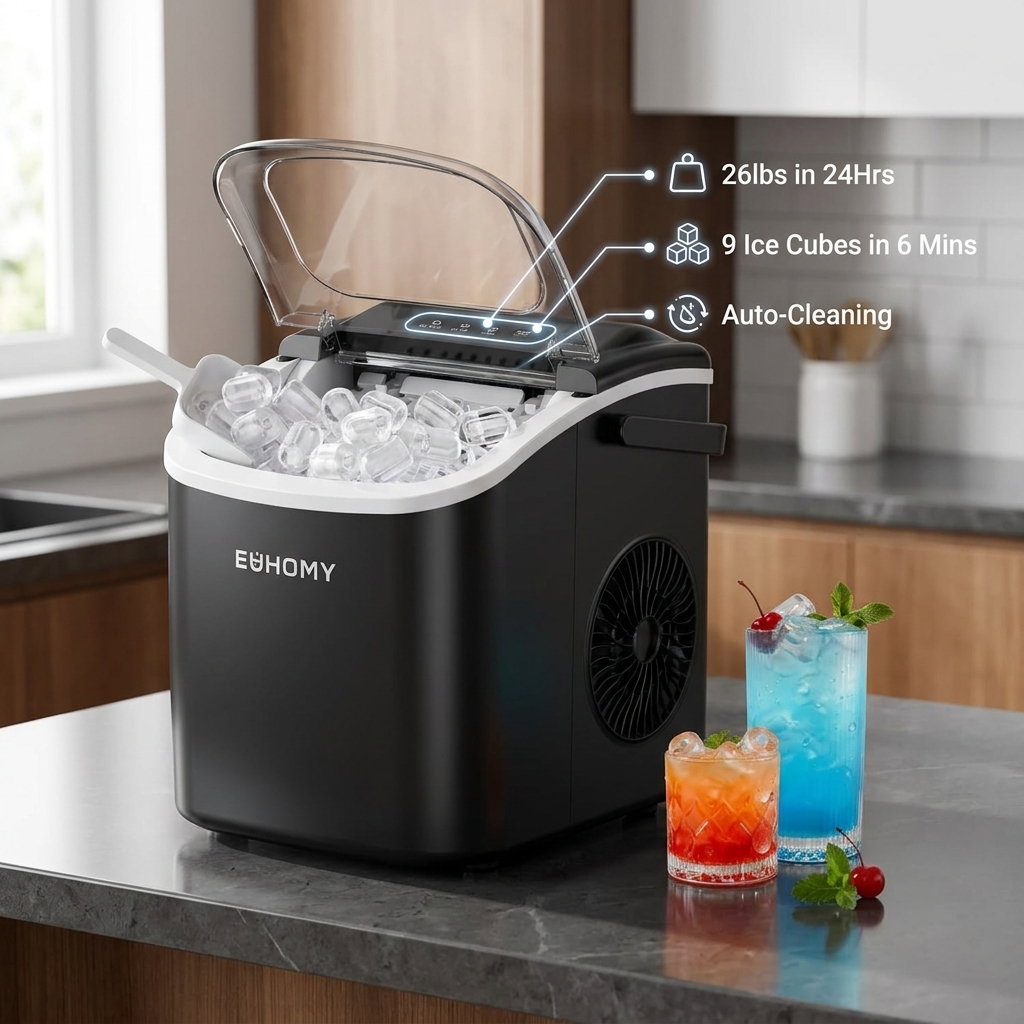
The EUHOMY countertop ice maker represents one of the many options available in this growing market. Unlike built-in freezer ice makers that require professional installation or renovation, countertop models offer flexibility and portability. They sit on your kitchen counter, plug into a standard outlet, and begin producing ice within minutes. For those considering whether a countertop ice maker makes sense for their situation, understanding the technology, capabilities, and practical applications is essential.
This article explores what countertop ice makers do, how they function, and what you should consider if you’re evaluating whether one might be useful for your home or lifestyle. We’ll look at the practical applications, the typical features you’ll encounter, and the situations where these machines prove most valuable.
Understanding Countertop Ice Makers: How They Work
Countertop ice makers operate on relatively straightforward mechanical and refrigeration principles, though the execution varies by model. Rather than creating ice the traditional way—by filling trays with water and waiting overnight in a freezer—these machines use a refrigeration cycle to rapidly freeze water into shaped cubes.
The basic process involves several steps. First, you fill a reservoir with water. The machine then pumps this water into a freezing chamber, where a refrigeration system cools it below freezing point. The machine uses sensors to determine when the ice has frozen sufficiently, then releases the formed cubes into a collection bin below. This cycle repeats automatically until either the collection bin fills to capacity or you turn the machine off.
The speed at which this happens is one of the primary appeals of these devices. Traditional ice makers in refrigerators can take several hours to produce a batch of ice. Countertop machines can typically produce their first batch within a span of minutes and continue cycling throughout the day. This rapid production makes them particularly useful in scenarios where you need ice quickly or in larger quantities than your freezer can accommodate.
The energy consumption of these machines is worth noting. Because they’re running a refrigeration cycle continuously, they do use electricity. However, the amount is generally comparable to running a small appliance—typically less than running a space heater or window air conditioner. The exact consumption depends on room temperature, water input temperature, and how frequently the machine cycles.
Key Features and Specifications
The EUHOMY model includes several specifications worth understanding, as they impact how the machine functions in real-world conditions.
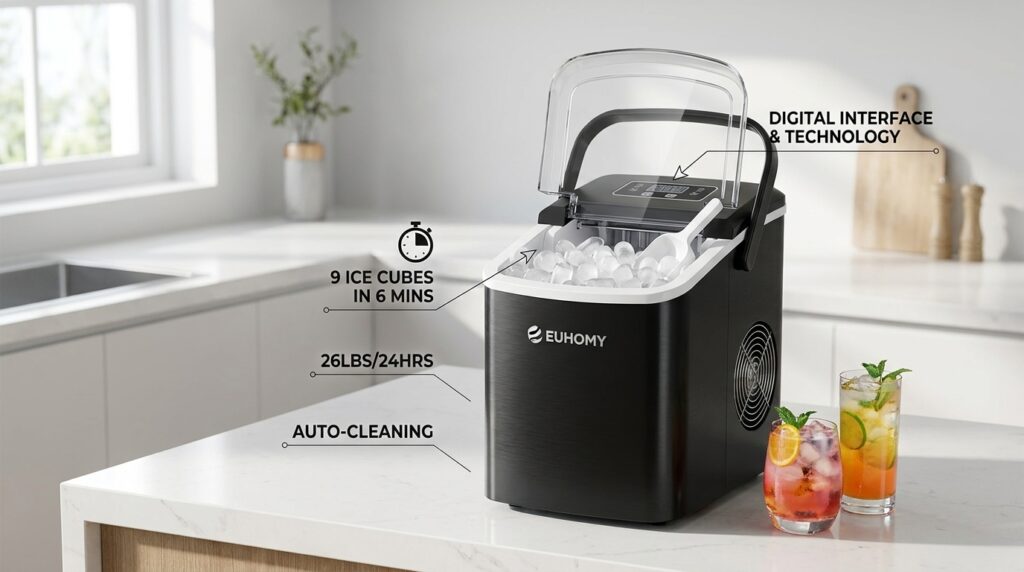
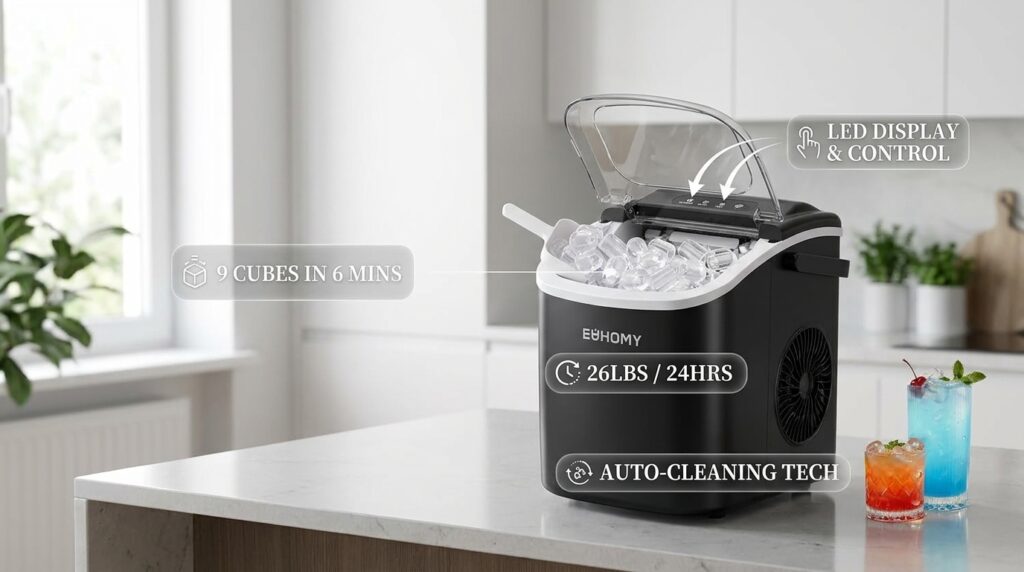
Production Capacity: The specification of 26 pounds of ice per 24 hours represents the maximum output under ideal conditions. This figure assumes consistent operation in a stable environment. The actual output you experience will depend on factors like room temperature, water temperature, and how frequently you’re harvesting ice. Warmer rooms require the machine to work harder to cool the water, which can slightly reduce production rates. Using room-temperature or warm tap water also requires more cooling time than using cold water.
Cycle Speed: The ability to produce 9 ice cubes within 6 minutes represents the speed of the initial cycle. This is one of the more practical features, as it means if you’re hosting guests and suddenly realize you’re low on ice, you can have a meaningful quantity ready quickly. However, it’s important to understand that this represents the cycle time, not continuous production. After this batch is complete, the machine needs time to cycle again before the next batch is ready.
Auto-Cleaning Function: The auto-cleaning feature is a maintenance convenience rather than a complete replacement for manual cleaning. This function typically involves running water through the system to help clear mineral deposits and buildup. Depending on your water quality, you may still want to periodically run vinegar through the system or perform deeper cleaning. Areas with hard water may require more frequent attention to prevent mineral accumulation.
Portability and Design: The included handle makes this unit genuinely portable in a way that built-in freezer ice makers are not. This means you can move it between rooms, take it to a cabin, load it into an RV, or relocate it if you rearrange your kitchen. The black color is a neutral choice that works well in various kitchen aesthetics, and the compact countertop size means it doesn’t require dedicated cabinetry or installation space.
Collection Basket and Scoop: These included accessories are practical additions. The basket prevents ice cubes from scattering across your counter when the machine isn’t being harvested, and the scoop makes it easier to transfer ice to glasses without your hands contacting the cubes directly. Some people prefer using the scoop as a measuring tool for drinks.
Practical Applications and Use Cases
Understanding when and how people use countertop ice makers reveals why these devices have found a market beyond just standard kitchens.
Home Entertainment and Hosting: One of the most straightforward applications is for people who frequently entertain. If you regularly host gatherings where you’re serving cold drinks, having on-demand ice production eliminates the need to empty your freezer’s storage or make advance ice preparations. You can keep the machine running in the background during a party, ensuring that ice remains available throughout the event.
Small Living Spaces: Apartment dwellers and people in older homes without ice makers in their refrigerators represent a significant use case. Rather than regularly buying bags of ice from the store or constantly refilling ice cube trays by hand, a countertop machine handles this automatically. Over time, this also saves money compared to repeatedly purchasing bagged ice.
Mobile Living Situations: The portability aspect makes these machines practical for people who spend time in RVs, at cabins, or in temporary housing. Many RVs have limited freezer space, and some older models don’t include ice maker functions. A portable machine that simply requires access to water and an electrical outlet solves this problem effectively.
Household with High Ice Consumption: Some households simply go through ice quickly—whether for large families, people who prefer ice-heavy drinks, or those living in hot climates. Rather than constantly running your home freezer to produce ice, a dedicated machine handles this more efficiently.
Fitness and Health-Conscious Households: People who consume large quantities of ice water or prefer ice in most of their beverages find these machines particularly useful. Some people using oral care devices or managing certain health conditions prefer having abundant ice available.
Workplace and Small Office Environments: Some small offices and retail spaces use countertop ice makers rather than maintaining multiple refrigerators or purchasing commercial ice machines.
Who Might Find This Approach Useful
While countertop ice makers have broad appeal, they make particular sense in specific situations.
People without in-refrigerator ice makers: Those with older refrigerators or models that never included ice-making capabilities represent the clearest use case. The convenience factor here is significant.
Renters: Since these machines require no installation or modifications to your living space, they’re ideal for renters who can’t install built-in solutions or who want to take their conveniences with them when they move.
Frequent entertainers: If you regularly host gatherings or manage spaces where multiple people are consuming cold beverages, the continuous ice production is genuinely practical.
People in high-consumption situations: Large families, households in warm climates, or individuals who consume substantial quantities of ice-cold beverages benefit from having a dedicated production source.
Travelers and mobile professionals: The portability means these machines travel to cabins, lake houses, RVs, or temporary housing situations.
People with limited freezer space: If your freezer is always at capacity with food storage, having ice produced externally rather than taking up valuable freezer real estate is an efficient approach.
Important Considerations Before Getting a Countertop Ice Maker
While these machines offer genuine convenience, several practical factors warrant consideration.
Water Quality Matters: The machine will perform best with good water quality. Hard water with high mineral content can cause buildup inside the unit, potentially affecting performance over time. If your tap water is notably hard, using filtered water or regularly cleaning the machine becomes more important. Some people use a water filter pitcher to pre-filter water before adding it to the machine’s reservoir.
Counter Space and Placement: These machines are compact, but they still require dedicated counter real estate. Additionally, proper placement matters for function. The machine should be positioned somewhere stable, away from direct sunlight or heat sources. Placing it next to an oven or in direct afternoon sun will require it to work harder to maintain freezing temperatures.
Electrical Requirements: The machine needs access to a standard electrical outlet. It cannot be plugged into an extension cord for safety reasons, which can limit placement options depending on your kitchen layout. Planning outlet access before purchasing is worthwhile.
Operating Noise: Like most small appliances with compressors, these machines generate noise during operation. The sound level varies, but if you have a small apartment or the machine will operate near bedrooms, you may want to research the specific noise level during cycling.
Initial Production Time: While the machine produces ice quickly in each cycle, the first batch typically takes longer than subsequent cycles. Understanding this means you can’t immediately plug it in and have ice within six minutes—you’ll need to account for the initial startup time.
Maintenance Commitment: The auto-cleaning feature is helpful, but these machines benefit from periodic manual maintenance. Depending on your water quality, you might need to run a cleaning cycle every few months to several months. This isn’t particularly burdensome, but it’s not completely maintenance-free.
Storage of Produced Ice: As the machine continuously produces ice, you need somewhere to store the excess. The included basket provides some capacity, but for longer-term storage, you might want to transfer ice to freezer bags for space efficiency.
Freezing Cold Water Requires Energy: If you put room-temperature or warm tap water into the machine, it will take longer to freeze and will consume more energy than using pre-chilled water. Some people keep a pitcher of chilled water available to maximize efficiency.
Understanding the Broader Context: Countertop Ice Makers as a Category
To properly evaluate the EUHOMY model, it’s helpful to understand the general landscape of countertop ice maker options and what differentiates various approaches.
Countertop ice makers exist in a range of sizes and capabilities. The smallest models produce just a few pounds per day and are designed for individuals or small households. Mid-range models like the one discussed here target households and small commercial applications with moderate to moderately high ice needs. Commercial-grade countertop machines exist but are typically more expensive and designed for restaurants or bars.
The ice shape produced varies by model. Most consumer-level machines produce bullet-shaped or crescent-shaped cubes, which work well for most beverages. Some specialty models produce different shapes, though this is less common in the consumer segment.Refrigeration approaches in countertop models generally follow similar principles, though the efficiency and cooling capacity vary. Models with larger compressors or better insulation typically perform better in warm environments and may produce ice more quickly, though this comes with trade-offs in size and noise level.
Water delivery systems differ as well. Some models require manual water refilling, while others can connect to a water line. The EUHOMY model uses a reservoir that you fill manually, which provides flexibility in placement but requires periodic refilling depending on how much ice you’re producing.
Price positioning within the category reflects these variations. Entry-level models cost less but may have slower production or smaller collection bins. Mid-range options balance cost with functionality. Premium models may offer faster production, better efficiency, or additional features like built-in filtration.
Frequently Asked Questions About Countertop Ice Makers
How often do I need to clean a countertop ice maker?
The frequency depends on your water quality and usage level. With good-quality water and moderate use, every 3-6 months is typical. Hard water or heavier use might require more frequent cleaning. The machine will often indicate when cleaning is needed, and the auto-clean function helps maintain it between deeper cleanings.
Can I connect the machine to my water line instead of filling a reservoir?
The EUHOMY model uses a manual-fill reservoir, so it doesn’t have plumbing connections. This is actually an advantage for portability but requires you to refill it periodically. Different models in the market have different approaches to this.
What happens if I don’t use the machine for a while?
If you’re not going to use the machine for an extended period, it’s wise to empty the water reservoir and let the machine run through one cleaning cycle to flush the system. Store it in a cool, dry place. Before using it again after storage, run it through a cleaning cycle with fresh water.
Does the machine make ice if the room is very hot?
Yes, it will continue operating, but efficiency decreases. In very warm rooms (above 90 degrees Fahrenheit), production rates will be lower, and the machine will work harder. This doesn’t damage the machine but does use more electricity. Some people in very warm climates position their machines in cooler interior spaces or run them during cooler times of day.
How much electricity does one of these machines use?
Typical consumption is roughly 100-200 watts during operation, which is modest compared to many household appliances. Over a full day of operation, assuming intermittent use, most countertop ice makers add $1-3 per month to an electricity bill, depending on local rates.
Can I use well water or non-filtered water?
The machines function with various water sources, but performance and longevity benefit from cleaner water. Well water that is high in minerals or sediment may require more frequent cleaning. Using filtered water or pre-filtering with a pitcher is a reasonable approach if your tap water quality is questionable.
What’s the difference between the ice produced by these machines and regular freezer ice?
The ice is essentially the same frozen water, just produced much more quickly using refrigeration equipment. Some people perceive subtle differences in clarity or taste depending on water quality and freezing speed, but functionally, ice is ice.
Can I take this machine camping in an RV?
Yes, this is one of its intended uses. You’ll need access to fresh water and an electrical outlet (most RVs have both). The portability and compact size make it practical for this application.
Does the machine need to rest between uses?
No, it doesn’t require rest periods. The machine can cycle continuously as long as water is available and it’s plugged in. However, allowing it brief periods between uses is normal as the cycles complete naturally.
Making Your Decision
Deciding whether a countertop ice maker makes sense for your situation comes down to honestly assessing your ice needs and living situation. If you find yourself regularly buying bagged ice, frequently wishing you had more ice available, or dealing with an existing ice maker that doesn’t produce enough, a dedicated machine addresses that problem directly. If your current setup meets your ice needs adequately, the convenience factor may not justify the counter space and electricity cost.
The portability aspect changes the calculation for renters, travelers, and people in temporary housing situations. The ability to take the machine with you when you move or travel fundamentally alters its value proposition compared to built-in solutions.
Beyond these personal factors, practical considerations matter. Ensuring you have counter space, electrical access, and a willingness to perform basic maintenance every few months are realistic prerequisites. Understanding that these machines work best with decent water quality and in reasonably cool environments helps set proper expectations.
The specifications associated with the EUHOMY model—the production capacity, cycle speed, auto-cleaning function, and portability—address the key features that matter in most household situations. Whether it represents the best option for your specific needs depends on your particular requirements and preferences.
Conclusion
Countertop ice maker machines have transitioned from novelty items to practical appliances for many households and situations. They solve a genuine problem—the need for more ice than typical freezers conveniently produce—in a way that doesn’t require renovation or professional installation.
The EUHOMY model, with its specifications designed for household use, portability for those with mobile lifestyles, and convenient features like auto-cleaning, represents a functional option in this category. Understanding what these machines actually do, how they function, and what realistic expectations look like helps inform whether adding one to your home makes practical sense.
The decision ultimately comes down to matching your actual ice consumption and living situation to what a countertop ice maker provides. For people who frequently entertain, live without ice makers, move frequently, or simply consume substantial quantities of ice, these machines offer genuine convenience. For others, the existing solutions already work adequately.