The O-Cedar RinseClean Spin Mop & Bucket System: A Practical Guide to Modern Floor Cleaning

Introduction
Keeping floors clean is one of those household tasks that never quite goes away. Whether you’re managing a small apartment, a family home, or simply want a more efficient cleaning routine, the tools you choose can make a real difference in both the quality of results and how much effort the process requires. The O-Cedar RinseClean Spin Mop & Bucket System represents a particular approach to floor cleaning that has gained attention among people looking for alternatives to traditional mopping methods.
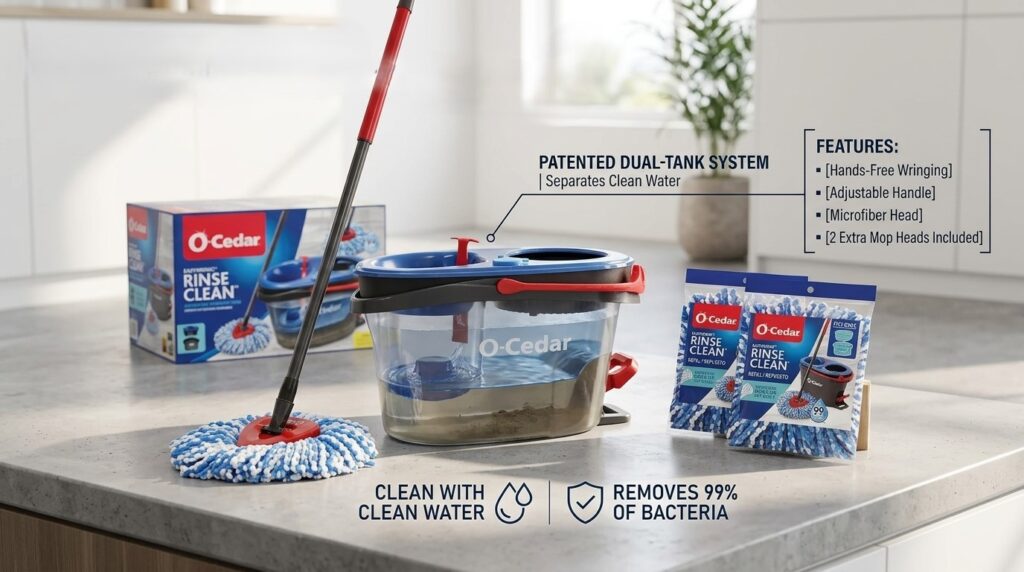
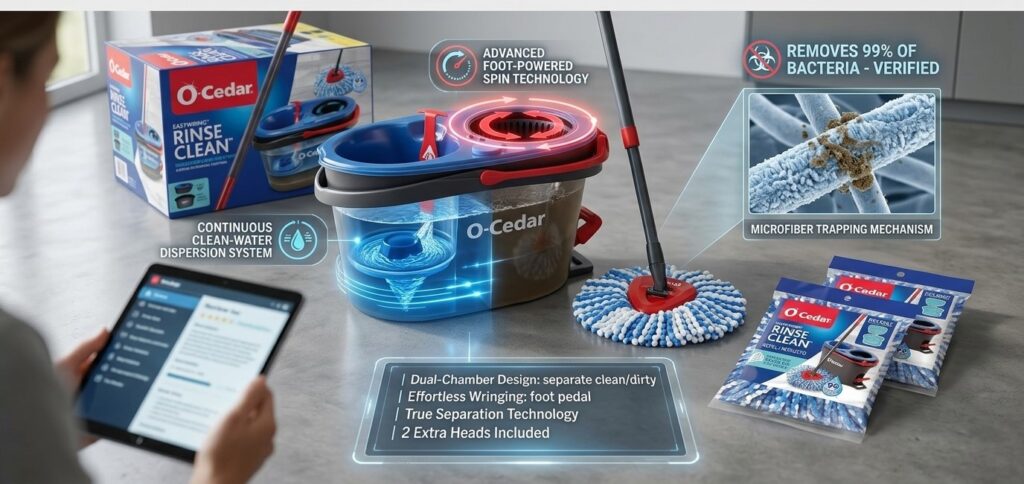
This system operates on principles that have evolved considerably over the past decade, particularly around water management and wringing efficiency. Instead of relying on manual wringing or traditional squeeze mechanisms, the RinseClean uses a spin mechanism designed to remove excess water from mop heads. The inclusion of two extra mop heads means you’re starting with multiple cleaning tools, which can be convenient for households that want to rotate through them or maintain backups.
Understanding what this system actually does, how it works, and whether it might fit into your cleaning routine requires looking beyond the product description and considering the practical aspects of modern floor maintenance.
Key Features and How They Work
The Spinning Mechanism
The core technology behind the O-Cedar RinseClean is its spin-based wringing system. Rather than twisting or pressing the mop head manually, you place it into the bucket and engage a foot pedal or lever mechanism that spins the mop head at high speed. This centrifugal action is meant to extract water more efficiently than traditional hand-wringing methods.
The practical value here relates to water control. When you’re mopping, the amount of water retained in the mop head matters significantly. Too much water can leave floors overly wet, potentially creating slip hazards and extending drying time. Too little water might mean your cleaning solution isn’t being applied effectively. The spinning mechanism aims to hit a middle ground where you get meaningful moisture for cleaning without oversaturation.
For people with arthritis, joint problems, or those simply looking to reduce repetitive strain during household tasks, removing the manual wringing element from the process can be genuinely useful. The mechanical approach transfers the work to a foot-operated mechanism rather than relying on hand strength.
The Bucket Design
The bucket in this system serves multiple functions. It holds water and cleaning solution, but it also houses the wringing mechanism. The design of the bucket affects how stable the system is while you’re using it and how easy it is to manage the mop heads during the wringing process.
A well-designed bucket for this type of system needs to be stable enough that it won’t tip when you’re applying pressure through the foot pedal, and the interior dimensions need to accommodate the mop head in a way that the spinning mechanism can operate effectively. The dual-compartment design of many spin mop systems aims to separate the clean water used for rinsing the mop from the dirty water that results from your actual cleaning, though implementation of this feature varies.
The Mop Heads
O-Cedar includes two extra mop heads with this system, giving you three total to start with. The mop head construction matters because it affects how well the head actually cleans and how long it lasts. Microfiber mop heads have become standard in this category because microfiber material has properties that capture and hold dirt and bacteria differently than traditional cotton or string-style mops.
The specific construction and quality of microfiber can vary considerably between manufacturers and product lines. Some microfiber heads are designed to be more absorbent and thick, while others are made to be lighter and faster-drying. The material composition affects both cleaning performance and durability through washing cycles.
Having multiple mop heads means you can rotate through them, allowing each to dry completely between uses and extending their overall lifespan. You can also dedicate different heads to different areas if desired—perhaps keeping one for kitchen cleaning and another for general floors.
The Clean Water Concept
A significant marketing point for this system involves the “clean with clean water” approach. In traditional mopping, you dip your mop into a bucket of water that becomes progressively dirtier as you clean. This system attempts to address that problem by providing a way to rinse the mop in clean water between cleaning passes.
The practical implementation typically involves two buckets or a two-compartment design where one side contains fresh water for rinsing and the other holds dirty water. This means you’re not repeatedly mopping with increasingly contaminated water, which can be important for both the actual cleanliness of your floors and your perception of the cleaning process.
The Bacteria Claim
The assertion that the system removes 99% of bacteria relates to the combination of factors: the spinning action helps distribute cleaning solution, the microfiber material has inherent properties that attract and trap bacteria and dust, and if you’re using appropriate cleaning agents, they contribute to bacterial reduction. It’s worth noting that this claim likely applies under specific testing conditions with particular cleaning solutions and methodologies.
How This Mop System Can Be Used
General Floor Cleaning
The straightforward use case involves regular floor maintenance in your home. You fill the bucket with hot water and your chosen cleaning solution, dip the mop head into the cleaning water, spin it to remove excess moisture, and mop your floors. When the mop becomes visibly dirty, you rinse it in clean water and continue. This process can work across different floor types, though the approach needs adjustment depending on whether you have tile, laminate, sealed wood, or other surfaces.
The advantage over traditional mopping for many people is the mechanical wringing, which you can do repeatedly without hand fatigue. If you’re cleaning a large space or multiple rooms, this aspect becomes more relevant.
Deep Cleaning Sessions
Some people use this type of system for periodic deep cleaning sessions beyond regular maintenance. The presence of multiple mop heads means you can work through them and maintain consistent moisture levels throughout the process. You can also use this for tackling a specific area that needs more intensive cleaning without worrying as much about recontaminating your mop.
Kitchen and Bathroom Cleaning
Kitchens and bathrooms often benefit from more frequent floor attention because of spills, moisture, and the concentration of bacteria in these areas. The spin mop approach can work well here, particularly if you’re using appropriate cleaning solutions for these spaces. The clean water rinsing aspect is especially relevant in these areas where you want to ensure you’re not just spreading contaminants around.
Entryway and High-Traffic Zones
Entryways and hallways that get heavy foot traffic can benefit from regular cleaning. Using the spin mop system with fresh, clean water each time provides a straightforward way to maintain these spaces without constantly refreshing a bucket of dirty water.
Maintenance Between Deep Cleans
Some households use lighter versions of this approach for quick maintenance between more thorough cleaning sessions. The ease of the wringing process makes it feasible to do frequent, lighter moppings without the friction and effort of traditional methods.
Who This System Might Suit
People with Physical Limitations
Those experiencing arthritis, carpal tunnel syndrome, or other conditions affecting grip strength and wrist movement may find the spin mechanism advantageous because it removes the manual wringing requirement. Elderly individuals or those recovering from injuries might similarly benefit from the reduced physical demand.
Households with Significant Cleaning Needs
Larger homes or households that need to clean floors frequently might find having multiple mop heads and a more efficient cleaning system worthwhile. Parents with young children, pet owners, or anyone dealing with high-traffic areas might fall into this category.
People Interested in Hygiene Approaches
If you’re someone who’s particularly interested in the clean water concept and the principle of not re-mopping with contaminated water, this system aligns with that approach. The ability to have separate rinse and cleaning water compartments appeals to this mindset.
Those Transitioning from Traditional Mops
People who’ve used traditional mops for years might appreciate exploring how a different mechanism approach changes their cleaning experience and results.
Budget-Conscious Cleaners
While there’s an initial investment in the system, if it reduces your reliance on disposable mop pads or lasts significantly longer than traditional mops, the per-use cost might be lower over time. The included extra mop heads add to this value proposition.
Important Considerations and Limitations
Surface Compatibility
Not every floor type responds identically to every mopping approach. Hardwood floors, especially those with delicate finishes, might be sensitive to moisture levels that this system produces. Laminate floors similarly need careful handling regarding water exposure. Sealed tile and stone generally handle moisture better. Understanding your specific floor type and how much water is appropriate for it is essential before assuming this system is suitable.
Mop Head Quality and Longevity
The included mop heads provide a starting point, but their actual longevity depends on factors including your water hardness, how frequently you wash them, and how vigorously you use them. Microfiber heads eventually lose effectiveness and need replacement. The system requires ongoing investment in replacement mop heads, which is a factor to consider when evaluating total cost of ownership.
Bucket Stability and Storage
Spin mop systems with mechanical wringing mechanisms require sufficient stability and clearance to operate effectively. You need adequate space to position the bucket and engage the wringing mechanism. Storage requires space for both the bucket and mop heads, which might be a consideration in smaller homes or apartments.
Learning Curve
While spin mop systems aren’t complicated, they do have a learning period. Getting the wringing to the right level—not over-spinning to the point of drying out the mop too much, but spinning enough to prevent oversaturation—takes a few uses to perfect. Some people find this intuitive immediately; others need adjustment time.
Cleaning Solution Considerations
The system works with various cleaning solutions, but the effectiveness of bacterial reduction and general cleaning depends significantly on the products you use. Not all cleaning solutions work equally well with microfiber mop heads, and some might reduce the lifespan of the material. This requires some attention to product compatibility.
Maintenance Requirements
The system itself needs regular cleaning and maintenance. The bucket, the mechanical components, and the mop heads all require attention to prevent mold, mildew, and bacterial growth. Properly storing the mop heads in a way that allows complete drying is important for longevity and hygiene.
Noise Level
The spinning mechanism creates noise when in operation. If you have household members sleeping nearby or you’re sensitive to noise, this is worth considering, especially if you anticipate doing the cleaning at various times.
General Comparison: Spin Mops vs. Other Approaches
Versus Traditional String Mops
String mops and traditional bucket-and-wringer systems have been used for decades. They’re inexpensive, widely available, and straightforward in concept. However, they require significant manual wringing effort, particularly if you’re working with substantial water volumes. The wringing process can be hard on hands and wrists. Spin mops generally provide more controlled wringing and less physical strain, though at higher initial cost.
Versus Disposable Mop Pads
Disposable mop pad systems (flat mops with replaceable pads you attach to a handle) have gained popularity for convenience. You simply replace the pad when it’s dirty. However, over time, this approach generates more waste and can become expensive. Reusable microfiber heads like those in spin mop systems produce less waste and potentially lower long-term costs, though they require you to actually wash and maintain them.
Versus Robotic Floor Cleaners
Autonomous floor cleaning robots have advanced considerably and appeal to people who want minimal hands-on involvement. However, they work best on open floor plans without significant obstacles, and they can’t handle stairs or tight spaces. They also have their own maintenance requirements and initial costs. They complement rather than replace traditional mopping for most households.
Versus Vacuum-Mop Combination Systems
Some systems combine vacuuming and mopping functions. These can be convenient for homes where both functions need doing, but they tend to be more expensive and can be bulky to store. They also may not perform either function as effectively as dedicated tools.
Versus Manual Flat Mops
Contemporary flat mop systems (microfiber pads on flat frames) offer simplicity and require less water, which some people prefer for delicate floors. They demand more physical effort for wringing and can be tiring. They tend to be lighter and more maneuverable than bucket systems, which some users prefer.
Frequently Asked Questions
How often should mop heads be replaced?
Mop head lifespan varies based on usage frequency, how well you maintain them, and your water quality. With regular washing and proper drying, a microfiber mop head typically remains effective for several months to a year of regular use. Signs that it’s time to replace one include visible deterioration, reduced water absorption, or persistent odors even after washing.
Can you use this system with any cleaning solution?
You can use various cleaning solutions, but microfiber works best with certain products. Avoid fabric softeners and oil-based products that can coat the microfiber and reduce its effectiveness. Most general-purpose floor cleaners work fine. Some people prefer vinegar and water solutions, while others use commercial floor cleaners specifically formulated for their floor type.
How hot should the water be?
Warmer water generally helps with cleaning effectiveness and can help with disinfection if you’re using appropriate cleaning products. However, if your floors are sensitive, extremely hot water might not be advisable. Most tap hot water (around 120°F to 140°F) works well without causing damage to standard floor types.
Is this system suitable for hardwood floors?
Hardwood floors require careful water management to avoid damage. You can use a spin mop on hardwood, but you need to be vigilant about not oversaturating the floor. Spinning the mop adequately to remove excess water is particularly important. Always check your specific floor’s care instructions first, and consider testing on a small, inconspicuous area before committing to mopping your entire hardwood floor.
Can the mop heads go in the washing machine?
Most microfiber mop heads for this type of system can be machine-washed, though it’s worth checking your specific product’s care instructions. Generally, washing them in warm water without fabric softener on a gentle cycle works well. Dryer heat can damage microfiber, so air-drying is typically recommended.
How long does one bucket of water last for cleaning?
This depends on how dirty your floors are and how often you rinse the mop. In a moderate cleaning session, a full bucket of water combined with the rinsing compartment can clean several rooms before needing fresh water. High-traffic or very dirty areas might require more frequent water changes.
What’s the actual effectiveness of the bacteria-removal claim?
The 99% bacteria removal claim likely applies under specific laboratory testing conditions with particular cleaning products and contact times. Real-world effectiveness depends on multiple factors: the cleaning solution used, how long the solution is in contact with the floor, the actual bacteria present, and your technique. A spin mop combined with appropriate cleaning products can certainly reduce bacterial contamination more effectively than not cleaning, but the claim shouldn’t be interpreted as sterilization or eliminating all bacteria.
Do you need special bucket cleaner or treatments?
Regular cleaning of the bucket itself is important. You can clean it with a general-purpose cleaner or even dilute bleach solution. Some people periodically disinfect their buckets to prevent bacterial growth. This isn’t typically an additional cost—using products you likely already have works fine.
Can you use this on tile, laminate, and vinyl?
All three can be mopped with this system, though each has specific water exposure tolerances. Tile generally handles moisture well and is the most forgiving. Laminate needs controlled moisture and proper sealing to avoid swelling. Vinyl’s compatibility depends on whether it’s luxury vinyl planks, standard vinyl sheet, or vinyl tile, each with different water tolerance. Understanding your specific surface and its care instructions is essential.
How does storage work for the mop heads?
Mop heads should be stored completely dry in a clean location. Many people hang them on a drying rack or clothesline to ensure complete air circulation. Some store them in a breathable bag or container rather than plastic, which can trap moisture and promote mold growth. Avoiding direct sunlight when possible helps preserve the microfiber material.
Is the bucket durable?
The bucket material, typically plastic, has a reasonable lifespan with normal use. Exposure to extreme heat, overly aggressive mechanical use, or dropping can reduce durability. Most buckets last several years with typical household cleaning use. UV exposure and certain cleaning chemicals might affect plastic over extended periods.
Can multiple people use the same bucket system?
Yes, multiple household members can use the same system. The benefit of having multiple mop heads means different people can use different heads if preferred. Ensure the bucket is cleaned and filled with fresh solution for different users if cleanliness between uses is important to you.
Conclusion
The O-Cedar RinseClean Spin Mop & Bucket System represents a particular approach to floor cleaning that addresses specific concerns many people have with traditional mopping methods. The mechanical wringing system reduces physical strain, the clean water concept provides a means to avoid repeatedly mopping with contaminated water, and the included multiple mop heads offer starting flexibility and rotational options.
Whether this system is the right choice for your household depends on your specific floors, physical needs, cleaning habits, and preferences. It’s not universally superior to every other cleaning approach—different methods excel in different contexts. For some people, particularly those looking to reduce physical effort or those interested in the clean water approach, it addresses genuine concerns. For others, simpler or more basic methods might work just as well.
The practical value comes from understanding what the system actually does, maintaining it properly, using appropriate cleaning products, and adapting the approach to your specific floor types and household needs. The included extra mop heads provide useful redundancy and flexibility, making the system more complete out of the box than some alternatives.